


A clear path makes a difference
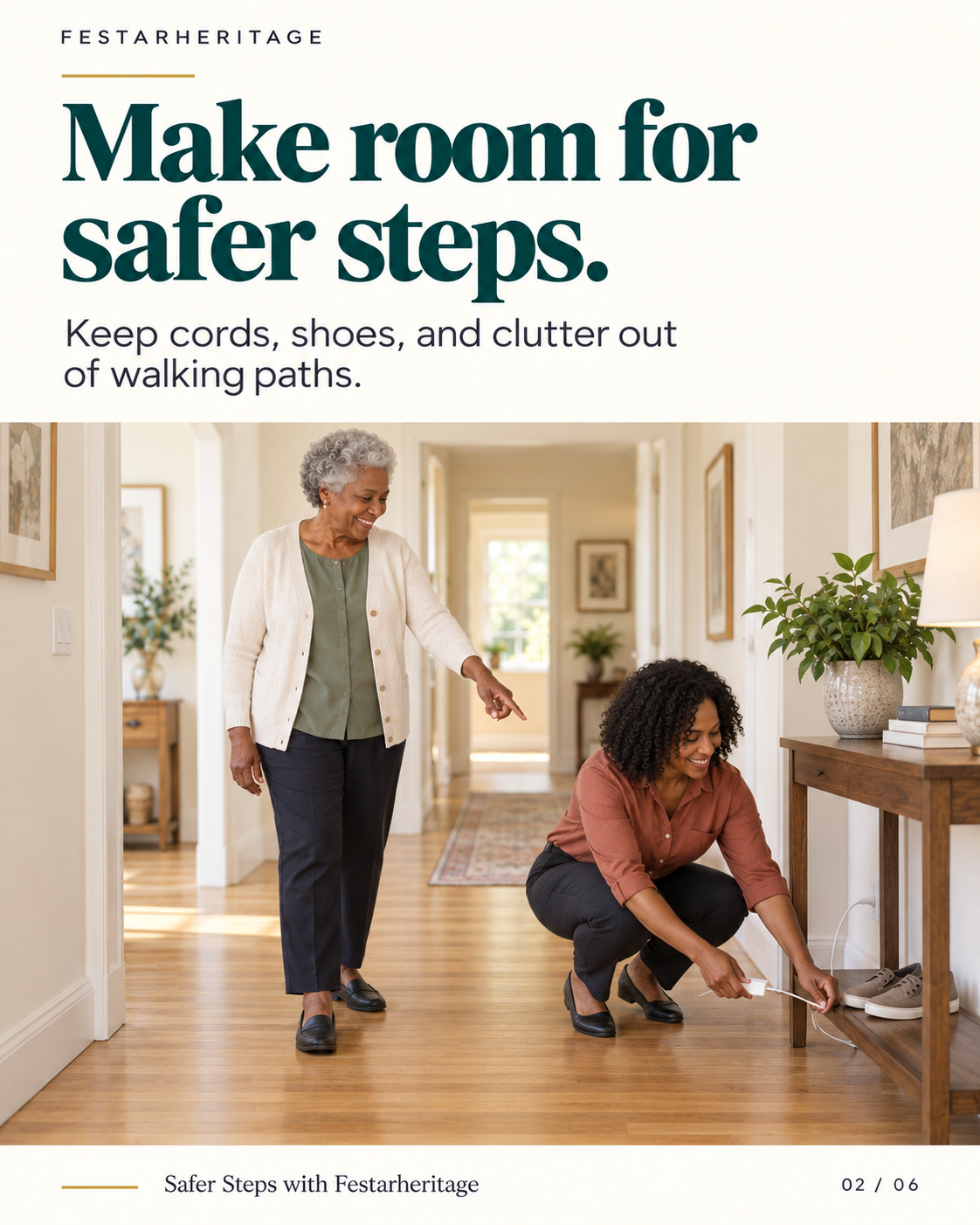
Look closely at the primary walking paths through your home: from the bedside to the hallway, from the favorite armchair to the kitchen, and through entryway doorways. Everyday items like charging cords, power strips, resting shoes, pet bowls, and reading piles often find their way into direct pathways. Rather than moving belongings without discussion, sit down together to create intuitive storage solutions. Storing everyday necessities between waist and eye level keeps reaching effortless. Tucking electronics cords safely along baseboards with simple clips and assigning dedicated bins or low benches for footwear helps keep main traffic routes open, intuitive, and welcoming.
Check what’s underfoot
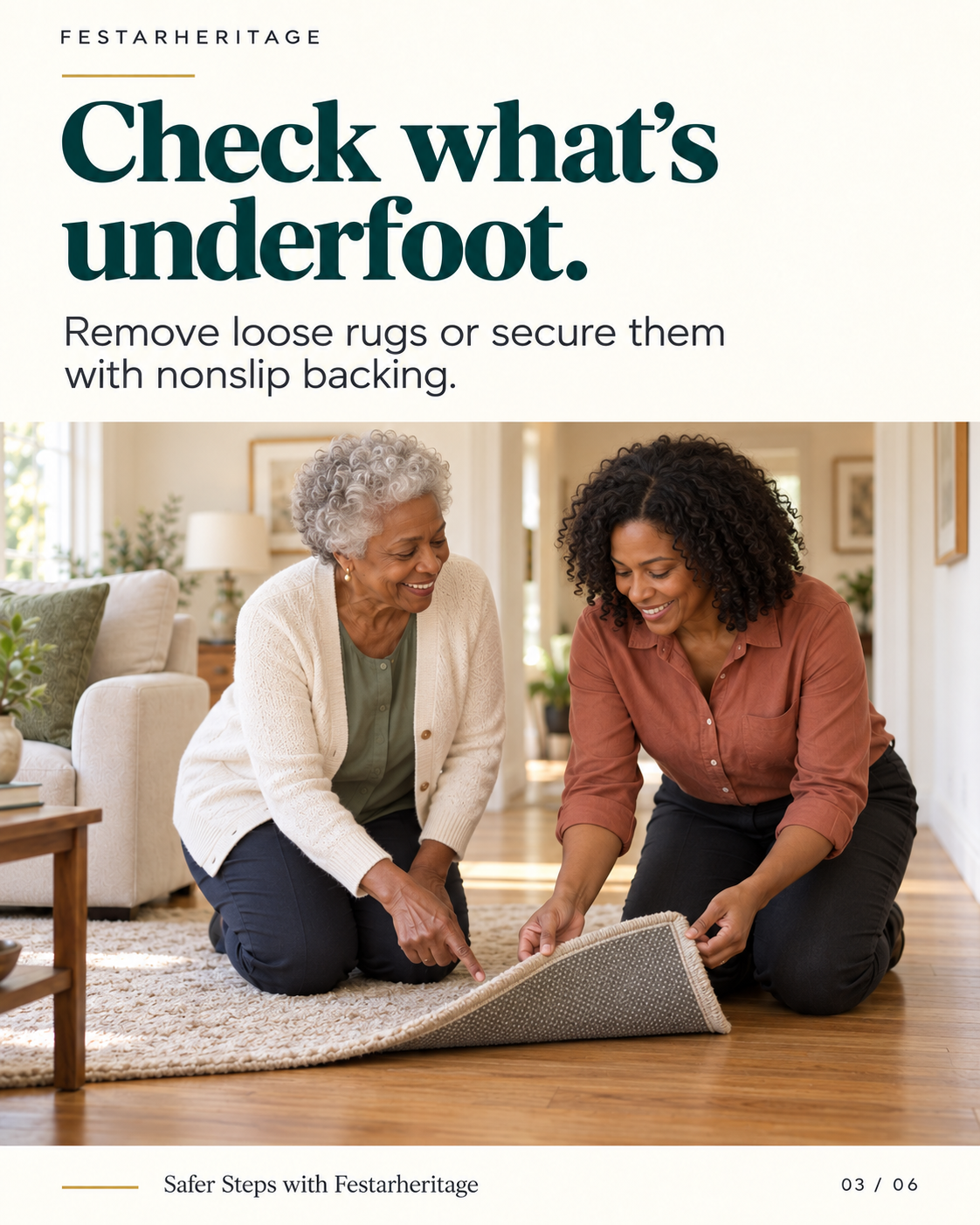
Flooring transitions deserve careful attention. Throw rugs and decorative area runners may add warmth and charm to a room, but curled corners, raised borders, and unanchored backing can easily catch a heel or slip under shifting weight. Walk together across each room to evaluate what is underfoot. For rugs that stay, firmly anchor them across the entire perimeter with double-sided rug tape or high-traction rubber backing designed for hard surfaces. In hallways or high-traffic areas, simply removing lightweight scatter rugs is often the most practical, immediate choice to create consistent, dependable traction underfoot.
Light the way
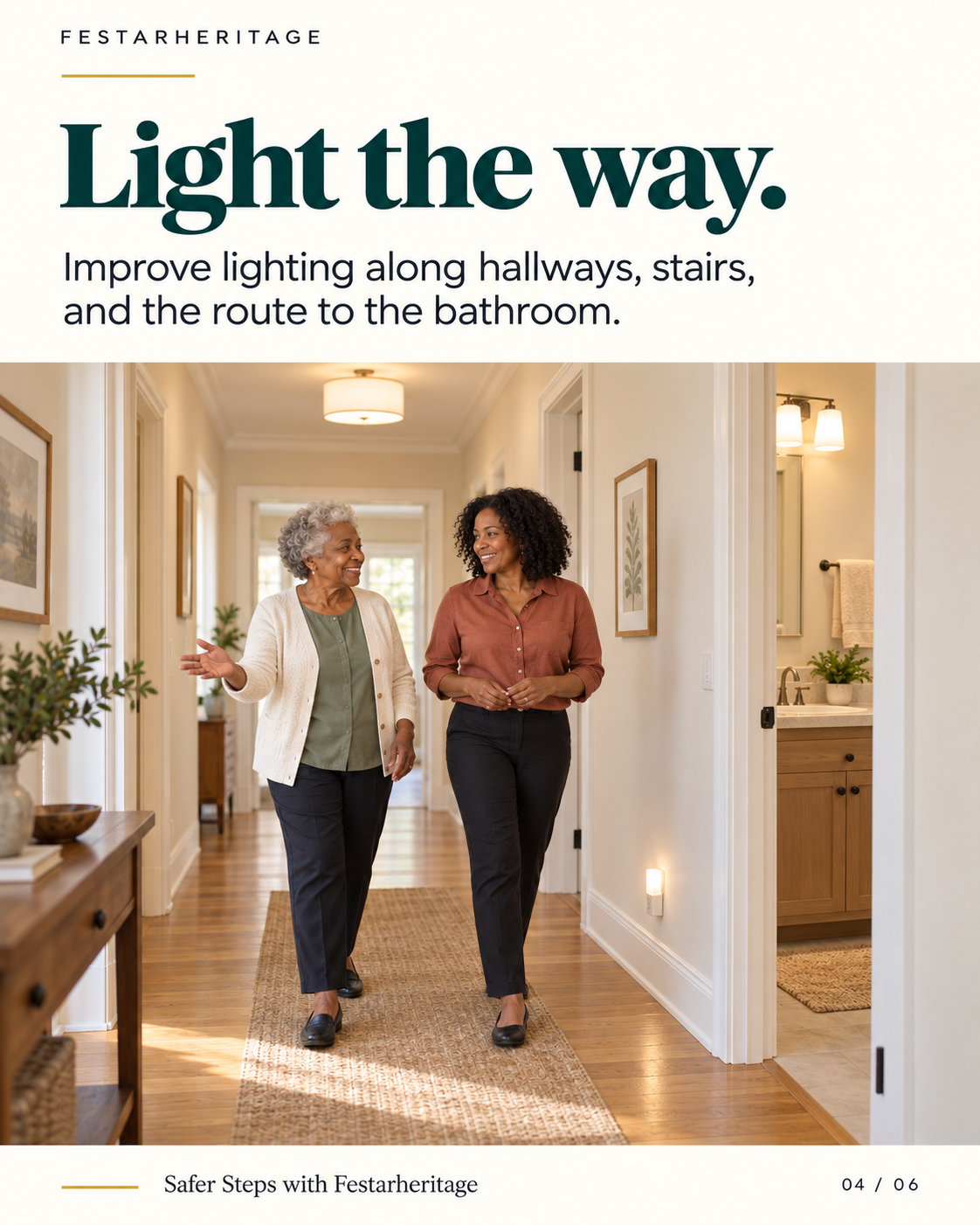
As our eyes age naturally, we require more illumination to detect subtle level changes, threshold steps, and obstacles on the floor. Pay special attention to the transition paths navigated during nighttime hours—particularly the route between the bedroom and bathroom, along stairs, and down quiet hallways. Plug-in motion-sensing night-lights provide gentle, automatic guidance without jarring bright glare. Ensure light switches are easy to reach immediately upon entering every room, or consider rocker switches and voice-activated bedside lamps. Consistent, shadow-free lighting brings instant clarity and security to every evening routine.
Make the bathroom safer
Bathrooms combine smooth tile, moisture, and frequent sit-to-stand transitions, making them one of the most critical areas to safeguard. Start by installing securely anchored grab bars inside the shower stall or bathtub and beside the toilet. A common hazard is relying on towel bars or wall-mounted accessories for leverage; towel racks and soap dishes are never designed to support human body weight and can tear free from drywall. Choose heavy-duty grab bars that anchor directly into wall studs, and hire a licensed home-modification professional or qualified carpenter to ensure solid, code-compliant installation. Complement secure bars with high-grip nonslip shower mats to create reliable traction.
Start with one change today
Meaningful safety does not require an overnight whole-home overhaul. Begin with a relaxed, shared walkthrough. Walk room by room together, listen to each other’s observations, and select just one manageable improvement to complete today.
Keep in mind that physical home surroundings are only one facet of overall well-being. Balance concerns, dizziness, medicines, vision, and previous falls should also be discussed with a healthcare professional. Taking proactive steps together preserves self-confidence and daily comfort.
Small changes. Safer steps. More independence.
Your Home Walkthrough Checklist
Use these five practical checkpoints during your next shared walkthrough: